Menu
Close
Silverfish are a common but often overlooked pest in Sydney homes, thriving in dark, humid spaces like bathrooms, roof voids, and storage areas. These silvery, wingless insects feed on paper, book bindings, wallpaper glue, and natural fibres, meaning they can quietly damage old photographs, documents, clothing, and stored boxes long before you spot one. Stark Pest Solutions provides thorough silverfish inspections and treatments across Sydney, targeting both the insects and the damp conditions that attract them.
Contact us today to learn more about our pest control services and discover how we can help keep your home or business completely pest-free.

Please fill the below form and one of our experts will get in touch with you shortly.
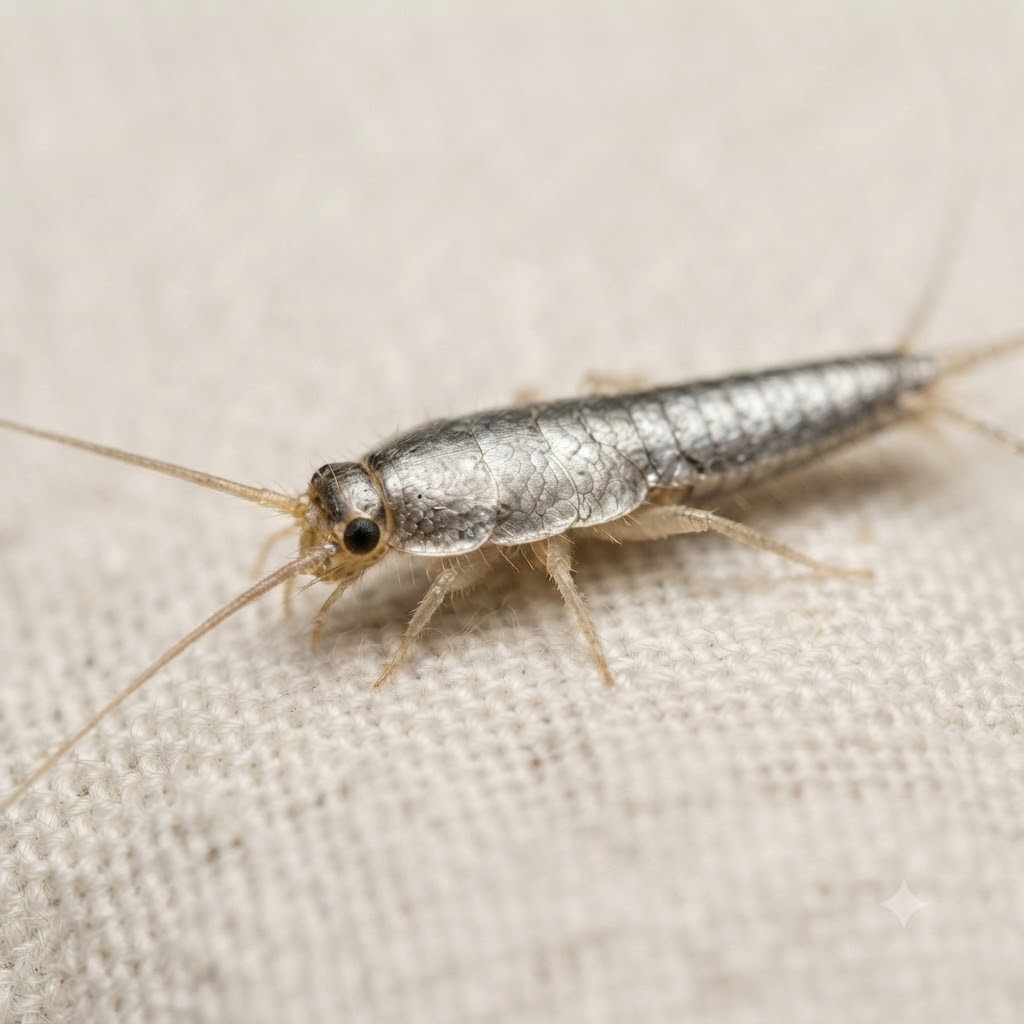
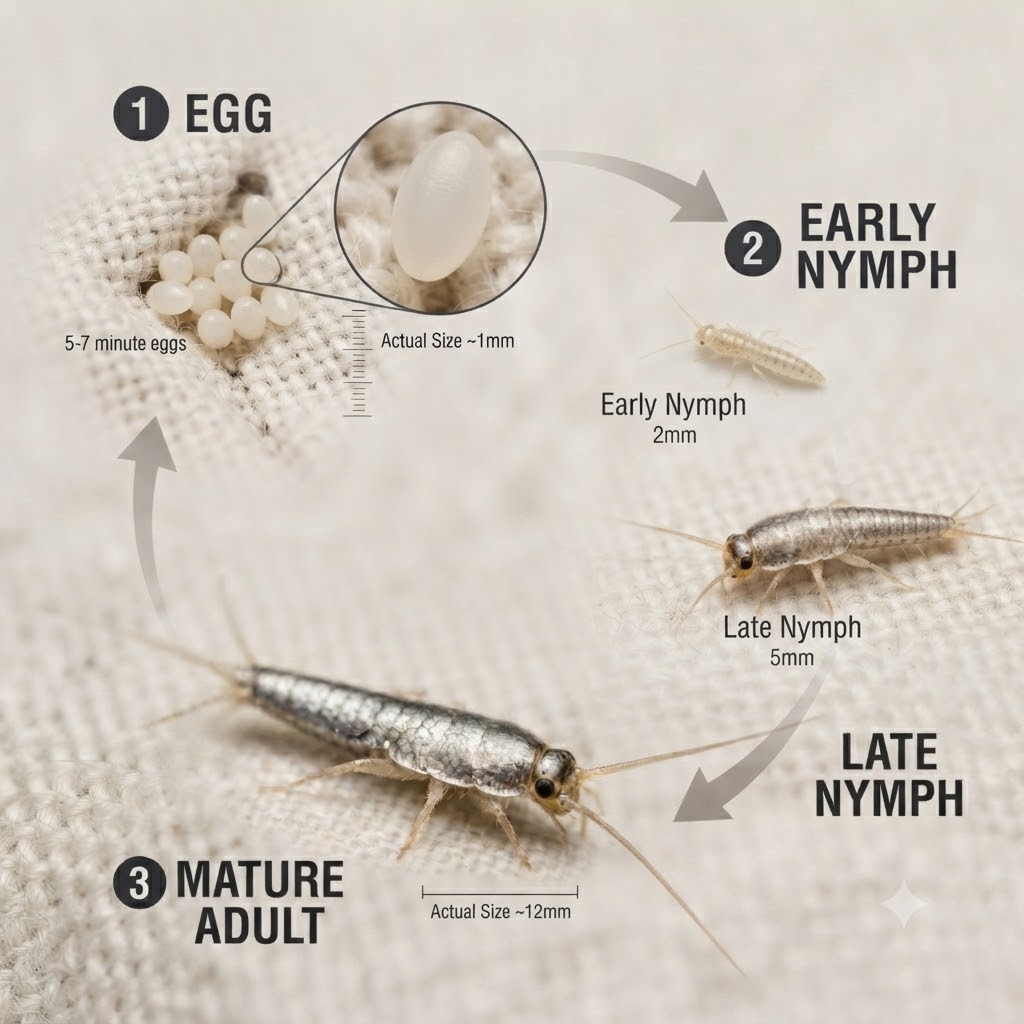
Silverfish (Lepisma saccharinum) are small, wingless insects with a distinctive silvery-grey, teardrop-shaped body and three long bristle-like tails. They are most active at night and prefer dark, humid environments such as bathrooms, laundries, basements, and roof voids. A female silverfish can lay dozens of eggs in her lifetime, hidden in cracks and crevices, and each egg can take anywhere from two weeks to two months to hatch depending on temperature and humidity.
Unlike many insects, silverfish do not go through a larval stage. Young silverfish look like smaller, paler versions of adults and can take up to a year to mature, moulting repeatedly throughout their lives, which can span several years. This long lifespan, combined with their preference for hidden, undisturbed spaces, means an infestation can quietly persist for a long time before it is noticed.
Silverfish are rarely seen in the open, so most infestations are identified by the damage and debris they leave behind. Look for small, irregular holes or notches chewed into book pages, cardboard boxes, wallpaper, and paper labels. Yellowish stains and tiny pepper-like faecal pellets on paper or fabric are another common giveaway, along with fine, silvery scales shed as the insects moult.
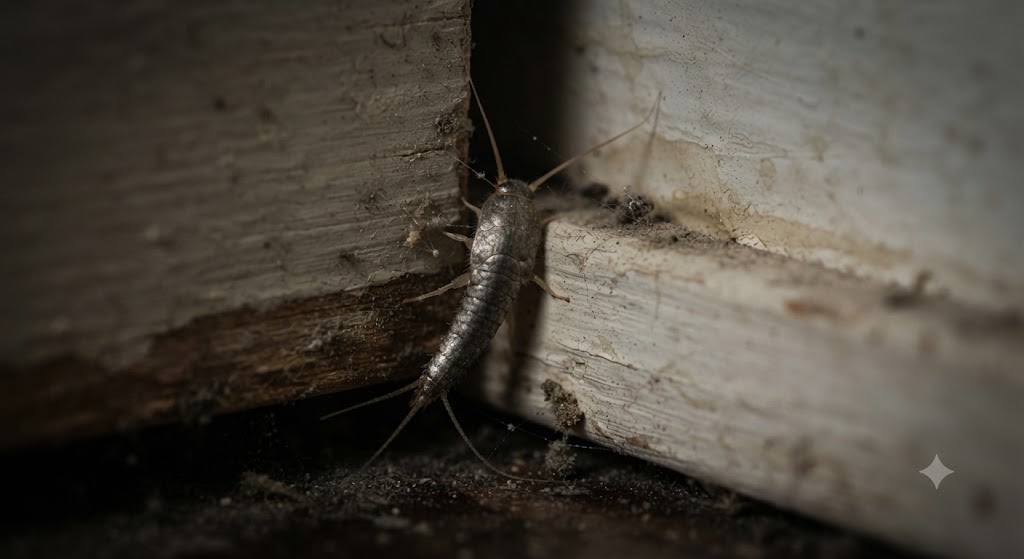
Because silverfish favour dark, humid spots, infestations are often concentrated in bathrooms, laundries, roof voids, and stored boxes in garages or cupboards that are rarely disturbed. If you switch on a light at night and see a fast, wriggling silver-grey insect dart for cover, or you notice unexplained damage to stored papers, photos, or clothing, it is worth arranging a professional inspection.

Every silverfish treatment begins with a detailed inspection of bathrooms, laundries, roof voids, subfloor areas, and storage spaces to identify moisture sources and active harbourage points. Since silverfish are drawn to humidity, we pay close attention to leaking pipes, poor ventilation, and damp cavities, as addressing these conditions is just as important as treating the insects themselves.
Once the inspection is complete, we apply a targeted treatment using low-odour residual insecticides and dust formulations to cracks, crevices, skirting boards, and roof void access points. This creates a long-lasting barrier that continues working after the initial visit, and we will also recommend practical moisture-reduction steps to help prevent silverfish from returning.
Effective silverfish control combines direct treatment with moisture management, since insecticide alone rarely solves a persistent problem. Our primary method is a residual insecticide treatment applied to skirting boards, wall cavities, roof voids, and other harbourage points, killing silverfish on contact and continuing to work for weeks afterwards. In roof voids and subfloor areas, we may also apply targeted dust treatments that reach deep into cracks and gaps insecticide sprays cannot penetrate.
Where humidity is a contributing factor, we will recommend improvements such as better subfloor or roof void ventilation, fixing leaking pipes, and using dehumidifiers in problem areas. Combining these steps with our treatment gives longer-lasting results than store-bought sprays, which typically only kill visible insects and do little to address the conditions allowing silverfish to keep breeding.
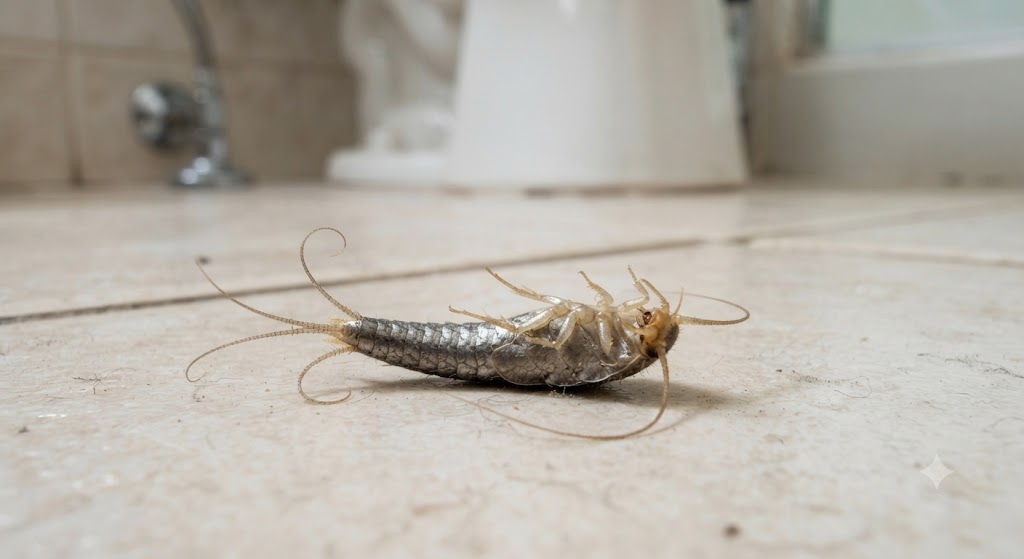
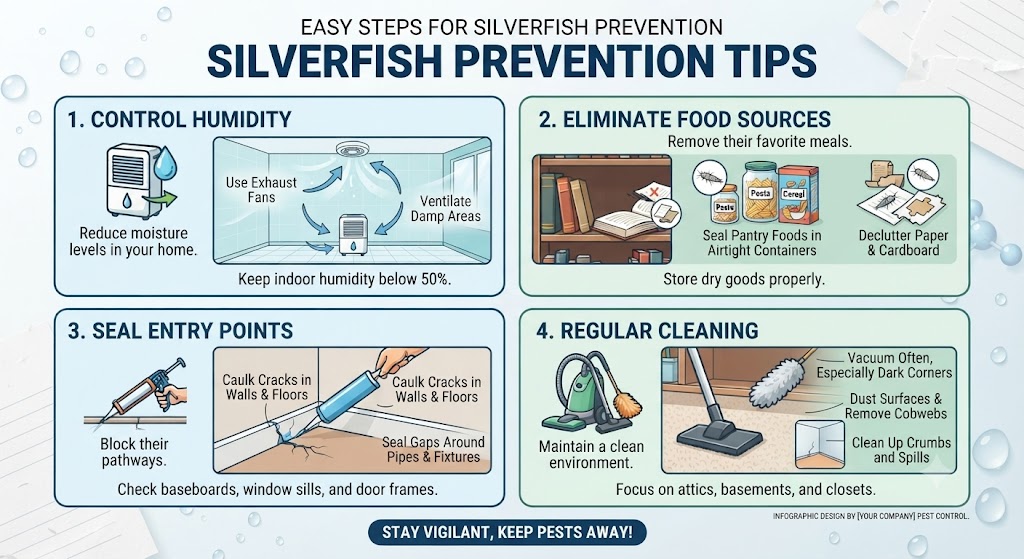
Since silverfish thrive in damp, humid conditions, reducing moisture around your home is one of the most effective ways to keep them away. Use extractor fans or open windows in bathrooms and laundries to cut down humidity, fix any leaking taps or pipes promptly, and consider a dehumidifier in poorly ventilated basements, roof voids, or subfloor areas.
Store books, photographs, important documents, and out-of-season clothing in sealed plastic containers rather than cardboard boxes, since silverfish feed readily on cardboard and paper. Vacuum regularly around skirting boards, bookshelves, and storage areas to remove eggs and food debris, and seal any cracks or gaps around pipes, skirting boards, and window frames where silverfish can enter or shelter.
Are silverfish dangerous?
No. Silverfish do not bite, sting, or spread disease, but they can cause real damage to books, documents, wallpaper, and natural fibre fabrics over time.
Why do I have silverfish if my home is clean?
Silverfish are drawn to humidity and food sources like paper and starch, not dirt. Even very clean homes can have silverfish if there is a damp bathroom, roof void, or storage area nearby.
How do I know if I have a silverfish problem?
Look for small holes in paper or cardboard, yellow staining, tiny shed scales, and pepper-like droppings in humid areas such as bathrooms, laundries, and storage spaces.
Can I get rid of silverfish myself?
DIY sprays may kill visible insects but rarely resolve the underlying moisture issues that attract them. A professional treatment combined with moisture control gives more reliable, longer-lasting results.
If silverfish are damaging your books, documents, or stored belongings, Stark Pest Solutions can help. We combine thorough inspections, targeted treatments, and practical moisture-reduction advice to deliver long-lasting results, whether you’re dealing with a small nuisance or a persistent infestation.
Contact us today to learn more about our silverfish control services and how we can help protect your home and belongings.
Real feedback from customers who trust our pest control services, sharing their experiences, satisfaction, and the peace of mind they gained after choosing us.
Posted on GoogleTrustindex verifies that the original source of the review is Google. Patrick from Stark Pest Solutions was fantastic! He was prompt, professional, and incredibly thorough in identifying and treating the issues at my property. He took the time to explain everything clearly and made sure I understood the steps he was taking. The service was efficient, friendly, and genuinely reassuring. I’m extremely happy with the results and highly recommend Patrick and the Stark Pest Solutions team to anyone looking for reliable pest control.Posted on GoogleTrustindex verifies that the original source of the review is Google. Pat went above and beyond with his work. We had two pest control technicians come out, and they could not figure out how to get rid of the German cockroaches. Pat came and dealt with it quickly and efficiently. He also conducts our termite inspections for our properties and for all our family’s properties—the best one-stop shop to go to. I can’t talk highly enough about him.Posted on GoogleTrustindex verifies that the original source of the review is Google. Absolutely outstanding service! Patrick was friendly and knowledgeable, providing advice and answering all our questions. Great result after the treatment - highly recommend Patrick and Stark Pet Solutions to anyone needing reliable pest controlPosted on GoogleTrustindex verifies that the original source of the review is Google. Patrick is an absolute Legend - He is very reliable and full of great advices to keep pest away from home. Super thorough in the process, friendly, and fairly priced ! His Yearly spray has been keeping our Home inside and out completely pest free. He is a life saver ! Thank you for your help Patrick ! Don’t think twice ! HIGHLY RECOMMEND !Posted on GoogleTrustindex verifies that the original source of the review is Google. Patrick did an amazing job! Very professional, reliable, and friendly. He explained everything clearly and made sure the job was done properly. Great service and results — highly recommend Patrick for anyone needing a trustworthy pest controller, and will definitely see you again!Posted on GoogleTrustindex verifies that the original source of the review is Google. Highly recommend Stark Services Pest Control! Patrick was so polite, professional, and really knew his stuff. You can tell he takes pride in his work and genuinely cares about helping his customers. Great service, great communication, and very reliable. Would definitely use Stark Pest Control again!Posted on GoogleTrustindex verifies that the original source of the review is Google. Thank goodness I found Patrick through my local Drummoyne/Five Dock pages. Respectful, quick communication via text, very well priced, on time - not creepy. Unlike my previous pest controller who doesn’t show up, Patrick made contact with me the same day, and completed the job promptly within 48 hours. He even emptied my planter pots that were full of water from the heavy rain attracting mosquitoes, and he sprayed 3 wasp nests from my neighbours windows which share a boundary with our property. He also inspected my roof cavity for possum activity and found an old birds nest which he cleared. Have already recommended to two of my friends. See you again in the new year. Shiraz Papas DrummoynePosted on GoogleTrustindex verifies that the original source of the review is Google. Patrick from Stark Services has really showcased what going above and beyond looks like! He was super patient with helping us deal with our possum situation but also liaising with strata to get further roof repairs done. We are so thankful and would highly recommend his services!Posted on GoogleTrustindex verifies that the original source of the review is Google. Pat & the team have been incredible. Their service has been fantastic. They work in with my schedule, and spray with products pet friendly which I really appreciate. Pat was great in explaining what he had done, and what suggestions he had based on the area and property factors. He went above & beyond my expectations, and is so reasonably priced. I had a general Pest Spray & bird proofing for my Chimney. Highly recommend the Stark Services team - they are fantastic!