






















Possum Control Sydney
Possums are a common sight in Sydney roof cavities, wall voids, and garden sheds, where their nighttime scratching, thumping, and territorial calls can quickly become a nuisance. Unlike introduced pests, brushtail and ringtail possums are native wildlife protected under the NSW Biodiversity Conservation Act 2016, meaning they cannot be harmed, trapped, or relocated without a licence.
Stark Pest Solutions provides fully compliant possum management using humane cage traps and one-way doors fitted to roof tiles and entry points, allowing possums to leave on their own terms while preventing re-entry. We also inspect and seal every access point around your roofline, eaves, and subfloor for a long-term solution rather than a temporary fix.
Get A Free Quote
Contact us today to learn more about our pest control services and discover how we can help keep your home or business completely pest-free.

Please fill the below form and one of our experts will get in touch with you shortly.
Understanding Possums & Common Species
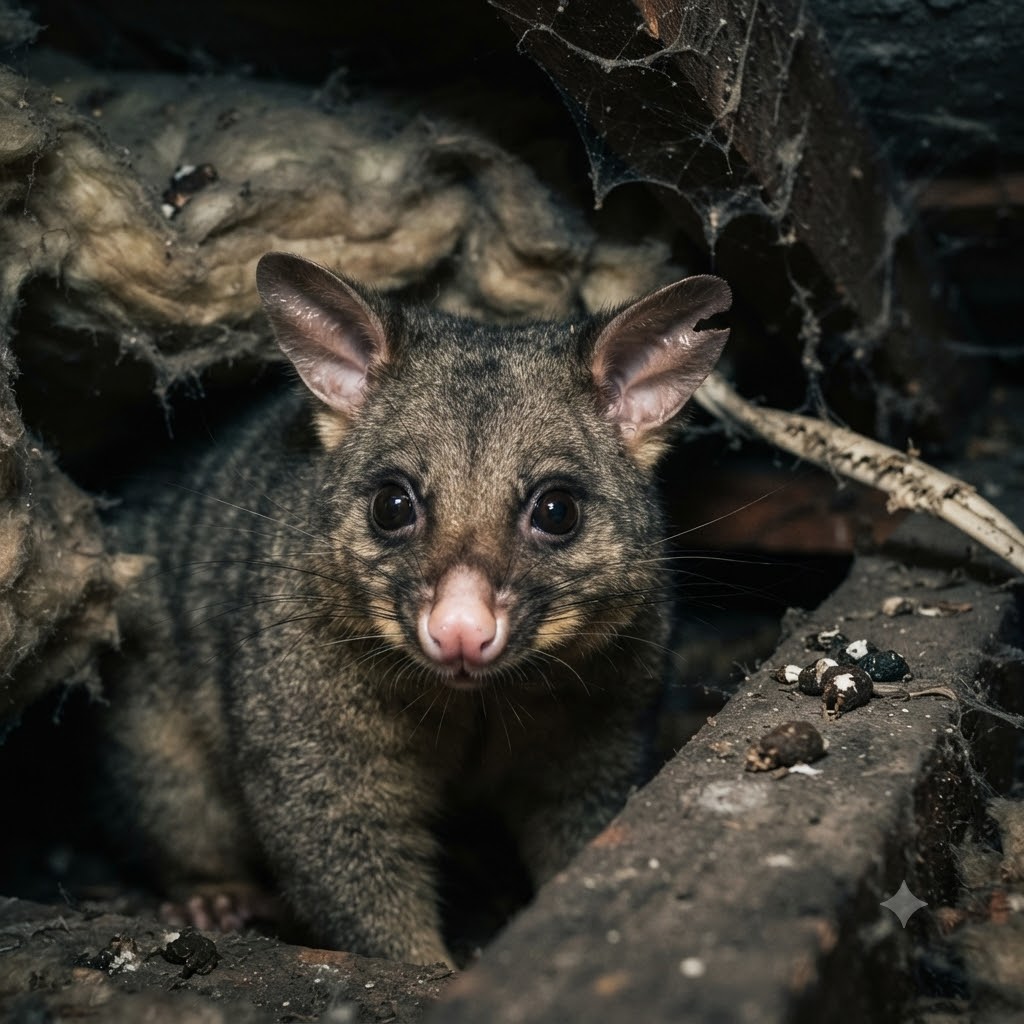
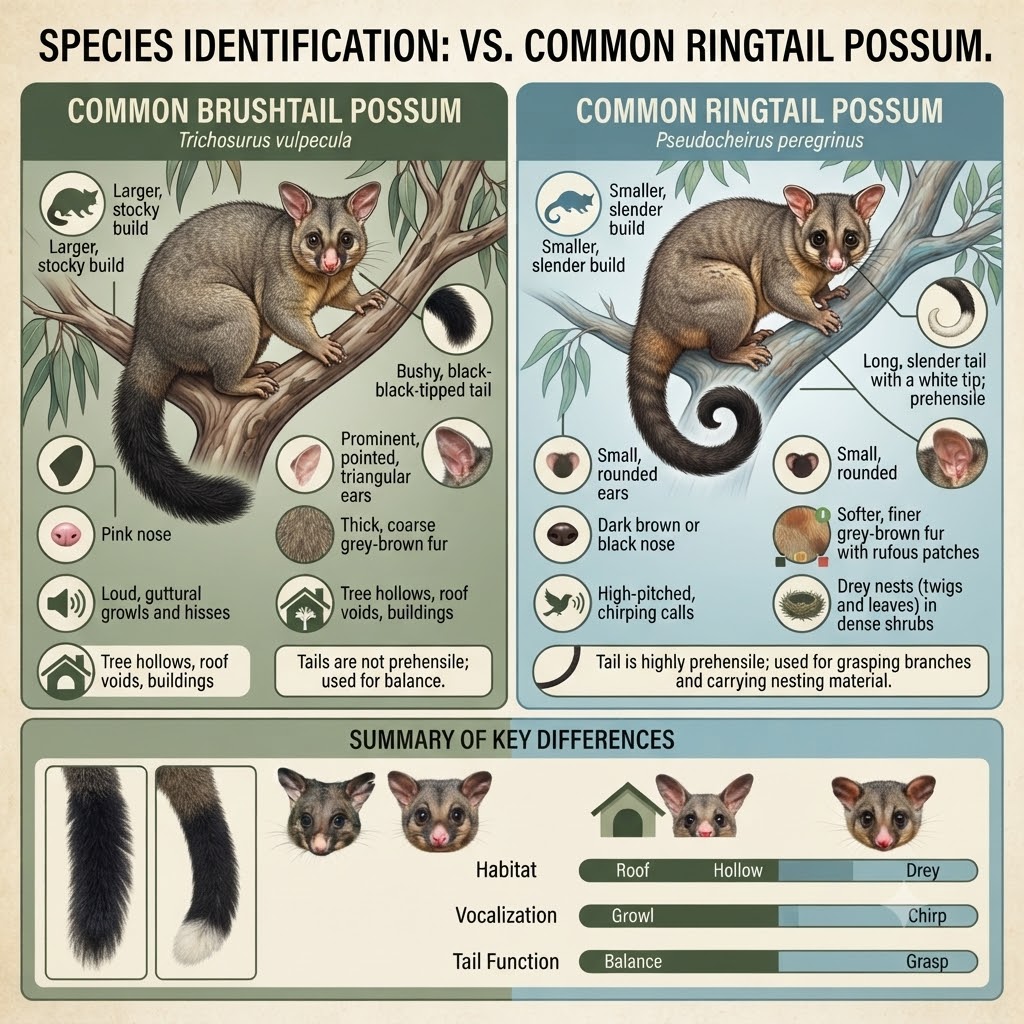
Two possum species are commonly found around Sydney homes. The common brushtail possum (Trichosurus vulpecula) is larger and stockier, with a bushy black-tipped tail, pointed triangular ears, and a loud guttural growl or hiss. Brushtails favour roof cavities, wall voids, and tree hollows, and are the species most often responsible for roof noise and structural nesting.
The common ringtail possum (Pseudocheirus peregrinus) is smaller and slimmer, with a long prehensile tail used for grasping branches, and typically builds a woven leaf-and-twig nest (drey) in dense shrubs rather than roof spaces. Both species are native fauna, fully protected in New South Wales under the Biodiversity Conservation Act 2016.
Signs of Possum Activity & Presence
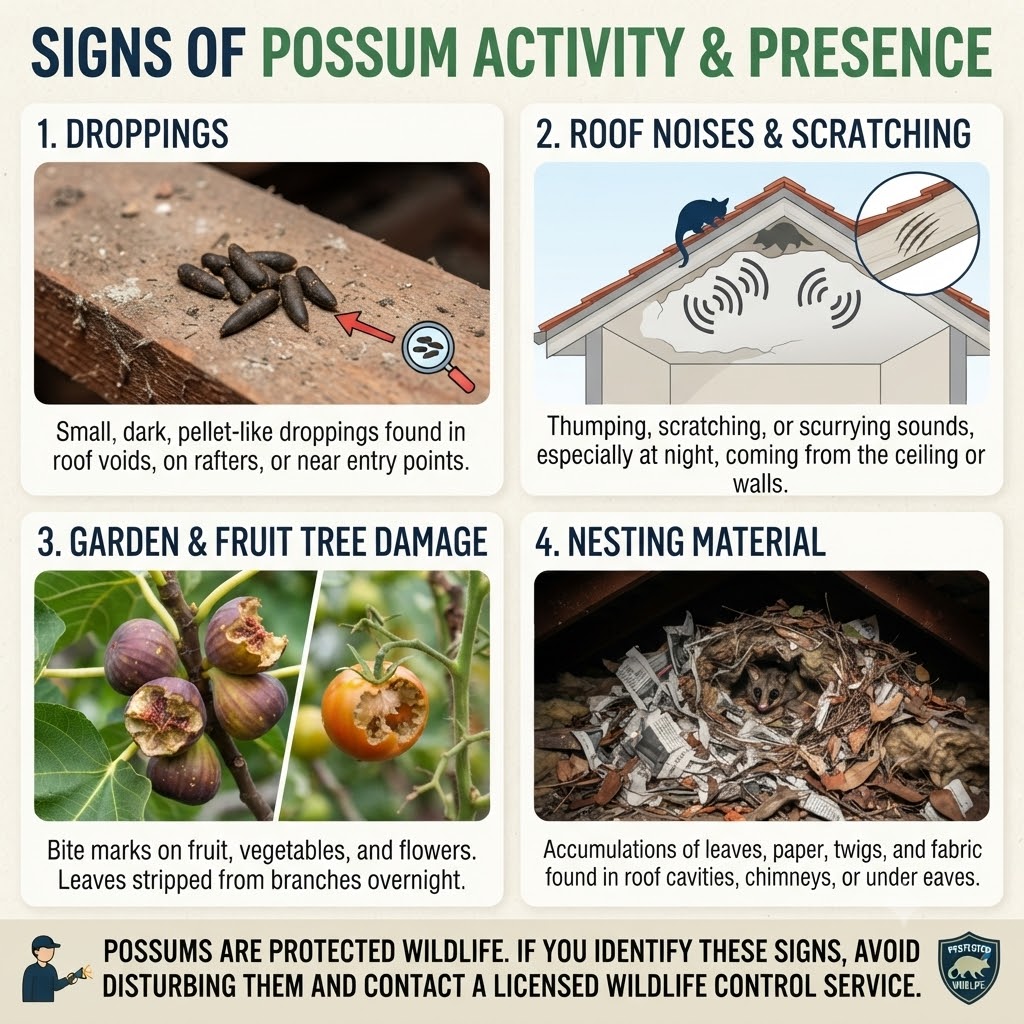
The most common sign of a possum is noise: loud thumping, scratching, or scurrying from the ceiling space, usually at night when possums are most active. You may also notice small, dark, pellet-shaped droppings along rafters or near roof entry points, and a musky odour where a possum has been territorially marking its den.
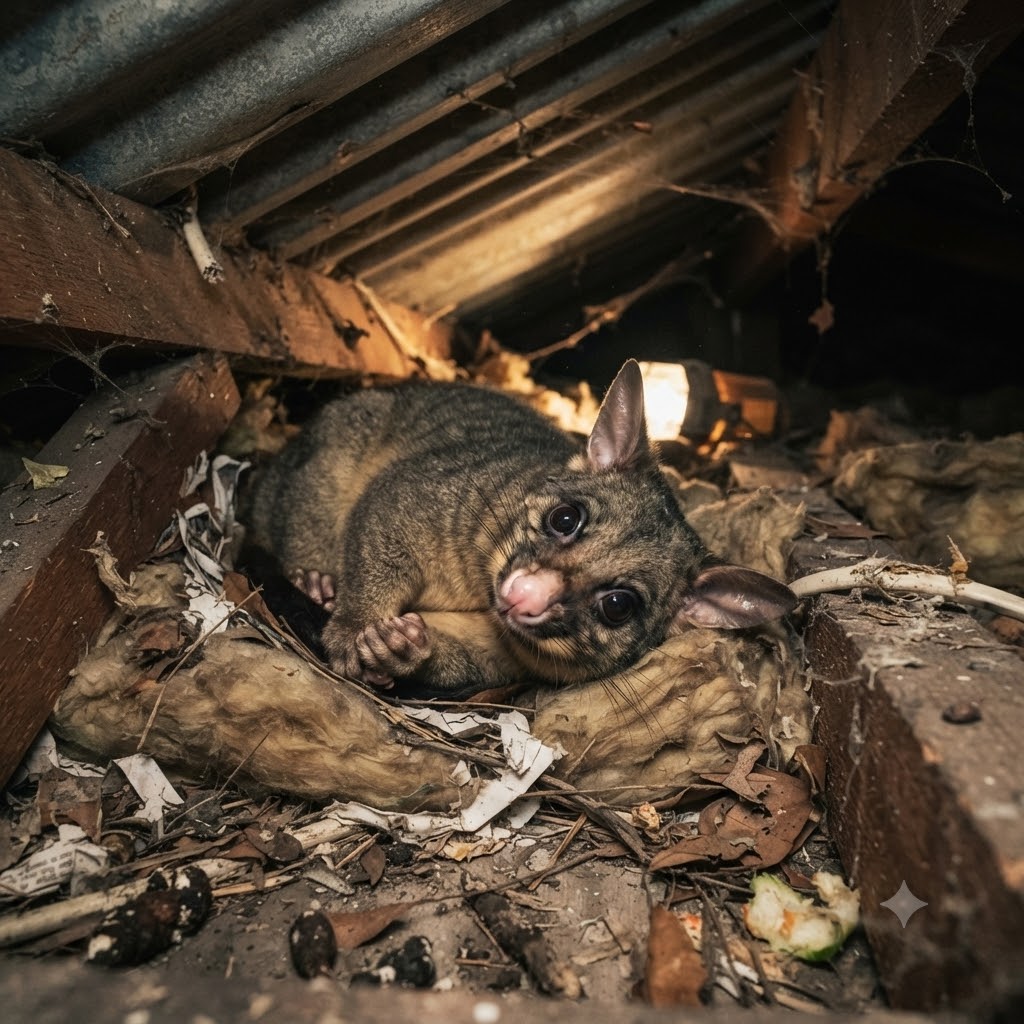
Outside, look for bite marks on fruit, vegetables, and flowers, or leaves stripped from branches overnight, as possums forage heavily in gardens. Inside roof cavities, accumulations of leaves, shredded paper, or fabric often indicate an active possum nest rather than a rodent one.
Our Possum Assessment & Exclusion Process
We begin with a thorough roof void and property inspection to confirm possum activity, identify the species involved, and distinguish possum signs from rodent or bird activity. We locate the den site and trace every entry point around the roofline, eaves, vents, and subfloor.
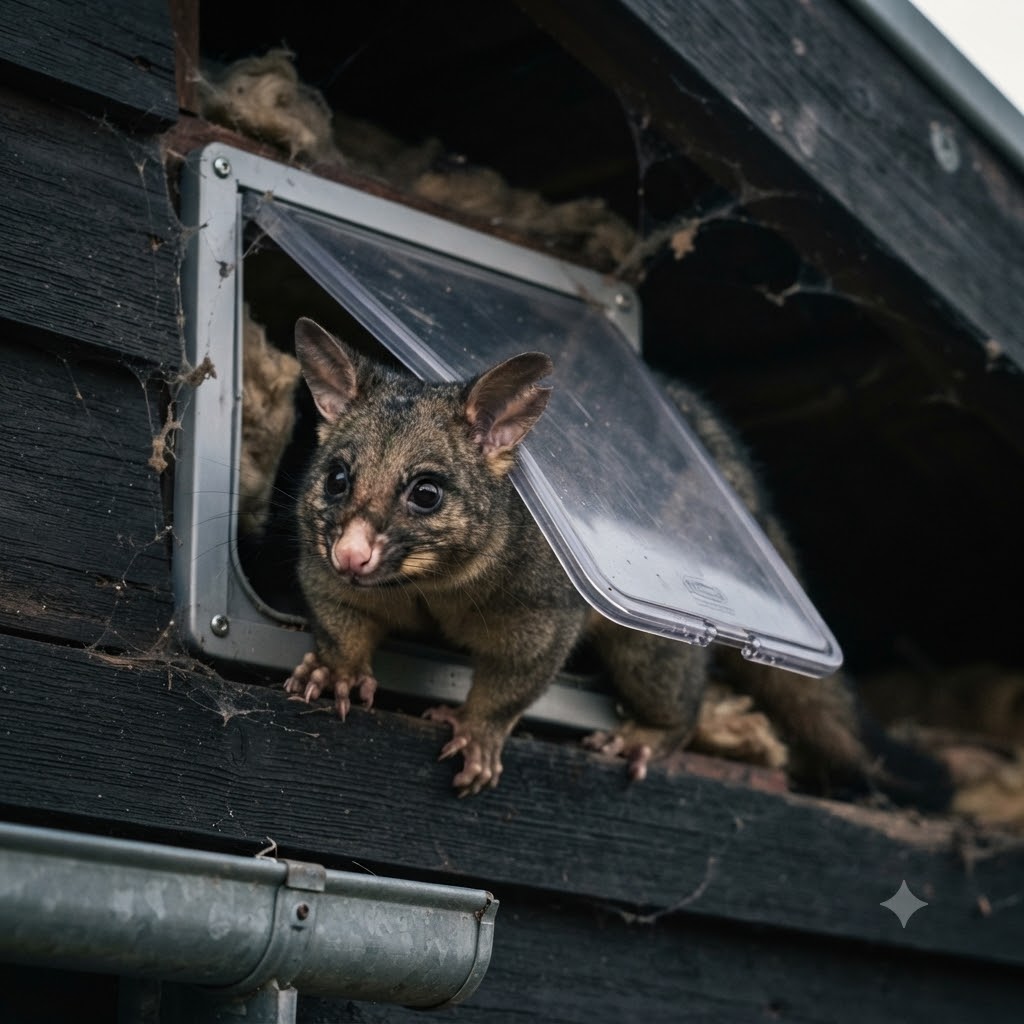
Once the possum has left to forage at dusk, we fit a one-way door over the main entry point, allowing it to exit but not re-enter. Where a one-way door isn’t practical, a humane cage trap may be used in line with licensing requirements. All other access points are then permanently sealed to prevent new possums moving in.
Possum Exclusion Solutions & Methods
One-way doors are our preferred solution for most roof possum problems. Fitted directly over the active entry point, they let a possum leave to forage but physically block its return, avoiding the stress of trapping altogether. Timing matters: doors are only installed once we’ve confirmed the possum has vacated for the night.
Where exclusion alone isn’t suitable, licensed catch-and-release trapping may be used. Under NSW regulations any trapped possum must be released at dusk within 150 metres of the capture point, near a climbable tree, since possums are highly territorial and often won’t survive relocation further afield. In every case, we finish the job by sealing roof gaps, vents, and other access points to stop future occupation.
Prevention Tips for Homeowners & Businesses
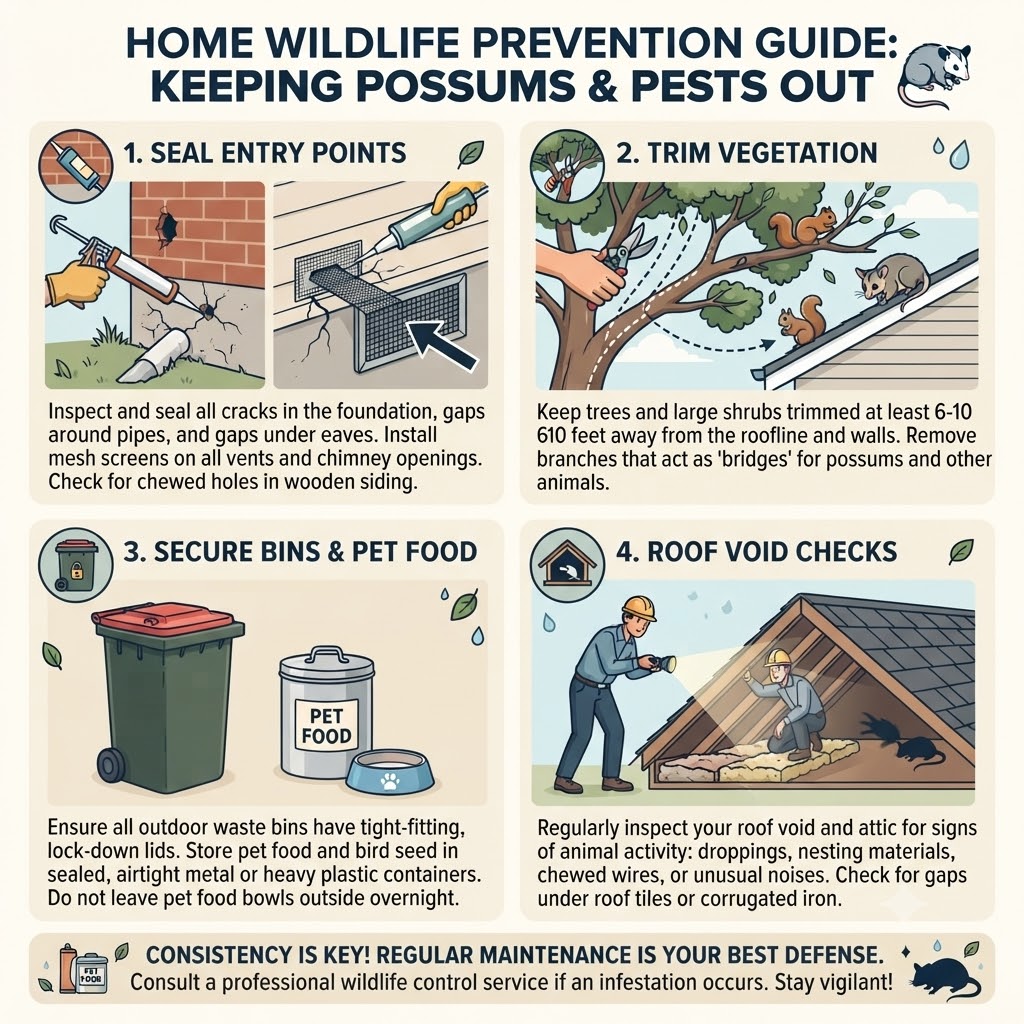
The best way to avoid a repeat possum problem is to remove opportunity. Trim overhanging tree branches that give possums easy access to your roofline, and inspect your roof void, eaves, and vents regularly for gaps, damaged tiles, or chewed timber that could become a new entry point.
Secure outdoor bins with tight-fitting lids and bring pet food inside overnight, as accessible food sources encourage possums to linger close to the house. If you already hear activity in the roof, act early — sealing entry points once a possum has already moved in without letting it out humanely first can trap it inside, so professional assessment is always recommended.
Frequently Asked Questions
Is it legal to trap and remove a possum myself in NSW?
No. Possums are protected native wildlife under the NSW Biodiversity Conservation Act 2016, and trapping, catching, or relocating one without a licence is an offence. Non-invasive exclusion methods like one-way doors are permitted without a licence.
Will the possum be harmed during removal?
No. We use humane one-way doors and cage traps that allow possums to leave unharmed, in line with animal welfare requirements set by the Biodiversity and Heritage Regulator.
Where is a captured possum released?
In line with NSW rules, any trapped possum is released at dusk within 150 metres of the capture site, near a tree it can immediately climb, since possums are highly territorial.
How do you stop possums from coming back?
Once we’re certain the possum has vacated, we permanently seal the entry point and check the roofline, eaves, and vents for any other gaps that could let a new possum move in.

Possum Removal Services
Our possum control services include humane removal and deterrent measures to prevent re-entry, protecting your property long term.

Clients Reviews
Real feedback from customers who trust our pest control services, sharing their experiences, satisfaction, and the peace of mind they gained after choosing us.
Posted on GoogleTrustindex verifies that the original source of the review is Google. Patrick from Stark Pest Solutions was fantastic! He was prompt, professional, and incredibly thorough in identifying and treating the issues at my property. He took the time to explain everything clearly and made sure I understood the steps he was taking. The service was efficient, friendly, and genuinely reassuring. I’m extremely happy with the results and highly recommend Patrick and the Stark Pest Solutions team to anyone looking for reliable pest control.Posted on GoogleTrustindex verifies that the original source of the review is Google. Pat went above and beyond with his work. We had two pest control technicians come out, and they could not figure out how to get rid of the German cockroaches. Pat came and dealt with it quickly and efficiently. He also conducts our termite inspections for our properties and for all our family’s properties—the best one-stop shop to go to. I can’t talk highly enough about him.Posted on GoogleTrustindex verifies that the original source of the review is Google. Absolutely outstanding service! Patrick was friendly and knowledgeable, providing advice and answering all our questions. Great result after the treatment - highly recommend Patrick and Stark Pet Solutions to anyone needing reliable pest controlPosted on GoogleTrustindex verifies that the original source of the review is Google. Patrick is an absolute Legend - He is very reliable and full of great advices to keep pest away from home. Super thorough in the process, friendly, and fairly priced ! His Yearly spray has been keeping our Home inside and out completely pest free. He is a life saver ! Thank you for your help Patrick ! Don’t think twice ! HIGHLY RECOMMEND !Posted on GoogleTrustindex verifies that the original source of the review is Google. Patrick did an amazing job! Very professional, reliable, and friendly. He explained everything clearly and made sure the job was done properly. Great service and results — highly recommend Patrick for anyone needing a trustworthy pest controller, and will definitely see you again!Posted on GoogleTrustindex verifies that the original source of the review is Google. Highly recommend Stark Services Pest Control! Patrick was so polite, professional, and really knew his stuff. You can tell he takes pride in his work and genuinely cares about helping his customers. Great service, great communication, and very reliable. Would definitely use Stark Pest Control again!Posted on GoogleTrustindex verifies that the original source of the review is Google. Thank goodness I found Patrick through my local Drummoyne/Five Dock pages. Respectful, quick communication via text, very well priced, on time - not creepy. Unlike my previous pest controller who doesn’t show up, Patrick made contact with me the same day, and completed the job promptly within 48 hours. He even emptied my planter pots that were full of water from the heavy rain attracting mosquitoes, and he sprayed 3 wasp nests from my neighbours windows which share a boundary with our property. He also inspected my roof cavity for possum activity and found an old birds nest which he cleared. Have already recommended to two of my friends. See you again in the new year. Shiraz Papas DrummoynePosted on GoogleTrustindex verifies that the original source of the review is Google. Patrick from Stark Services has really showcased what going above and beyond looks like! He was super patient with helping us deal with our possum situation but also liaising with strata to get further roof repairs done. We are so thankful and would highly recommend his services!Posted on GoogleTrustindex verifies that the original source of the review is Google. Pat & the team have been incredible. Their service has been fantastic. They work in with my schedule, and spray with products pet friendly which I really appreciate. Pat was great in explaining what he had done, and what suggestions he had based on the area and property factors. He went above & beyond my expectations, and is so reasonably priced. I had a general Pest Spray & bird proofing for my Chimney. Highly recommend the Stark Services team - they are fantastic!