Menu
Close
Honey bees are vital pollinators, but a hive or swarm that establishes itself in a roof void, wall cavity or busy outdoor area can pose a real safety risk, particularly for children, pets and anyone with a bee allergy.
Because European honey bees are a protected and highly valuable species in NSW, bee removal is handled differently to general pest control: wherever it’s safe and practical, we prioritise live relocation of the colony by a registered beekeeper rather than chemical treatment. Stark Pest Solutions assesses each bee problem individually, so you get an outcome that’s safe for your property and responsible towards the bees themselves.
Contact us today to learn more about our pest control services and discover how we can help keep your home or business completely pest-free.

Please fill the below form and one of our experts will get in touch with you shortly.
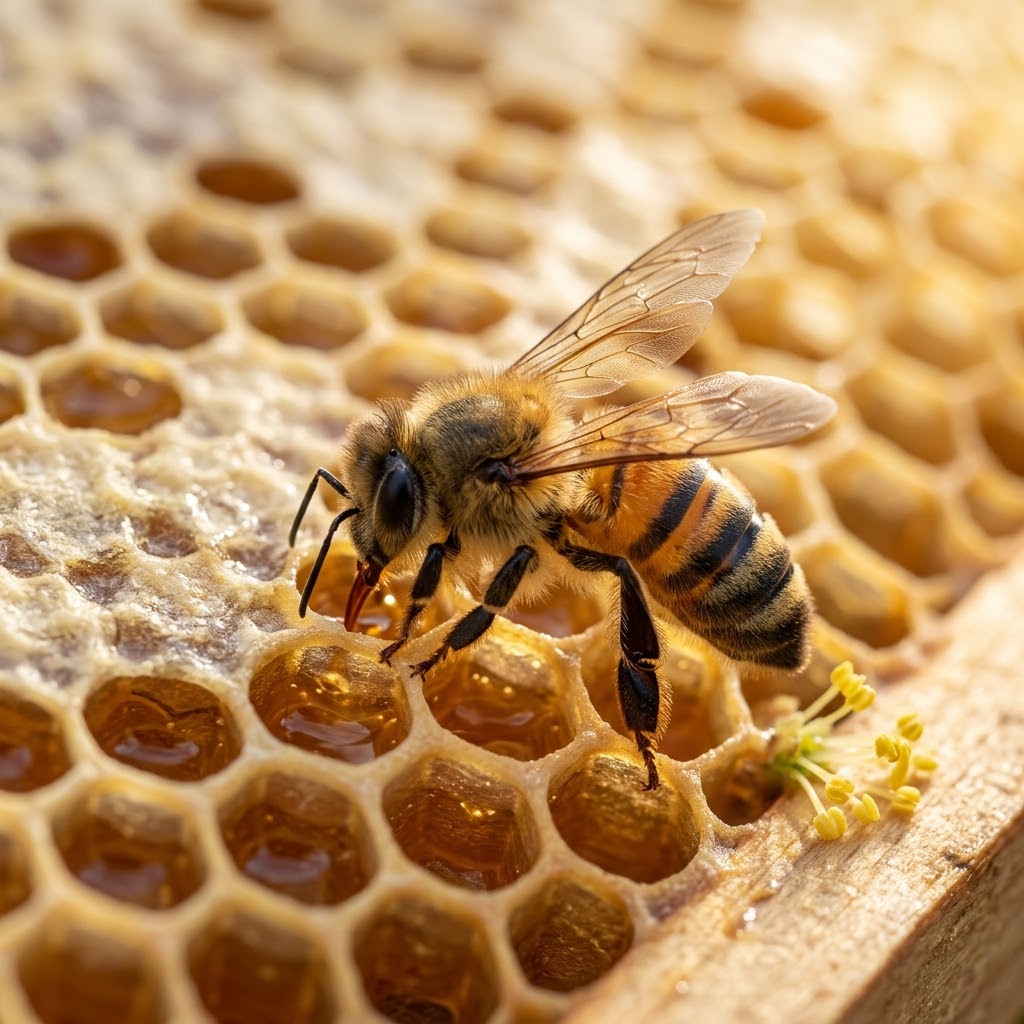
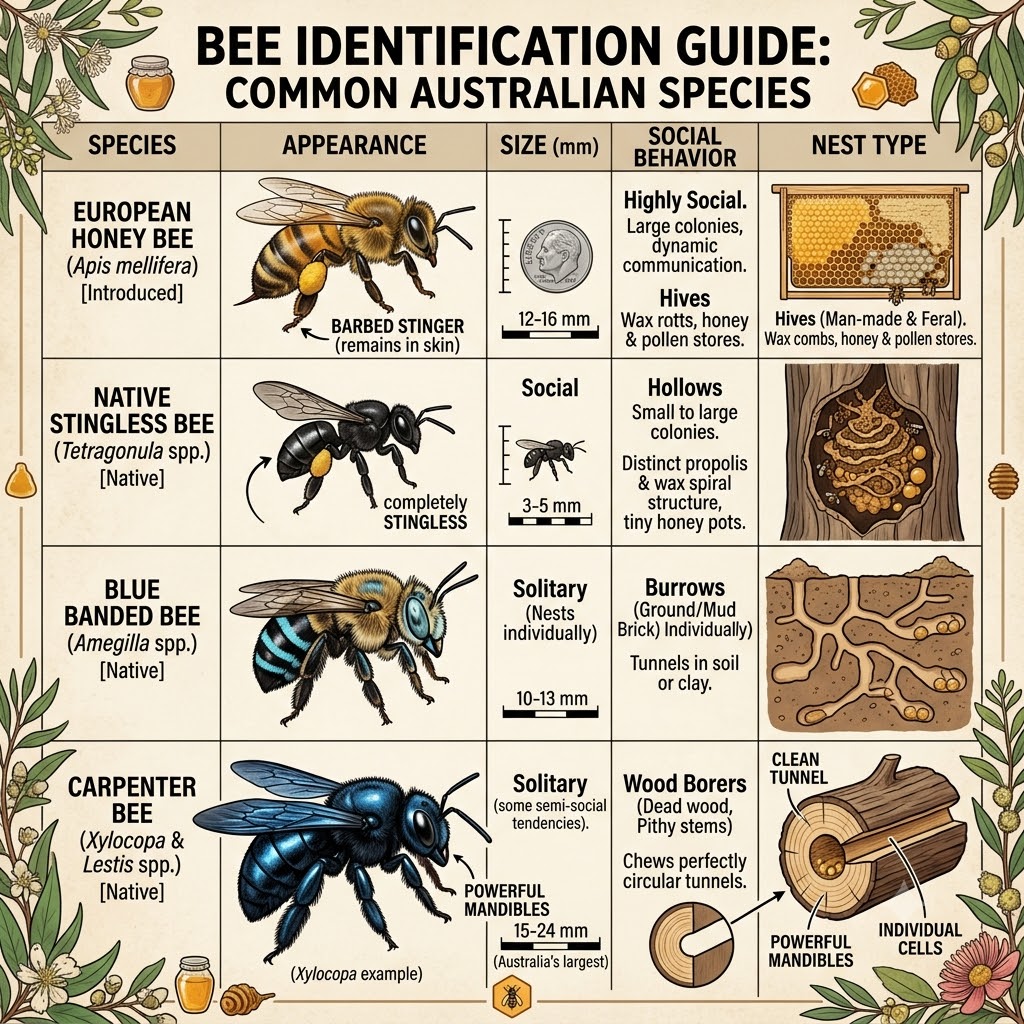
The European honey bee (Apis mellifera) is by far the most common bee encountered around Sydney homes, recognisable by its fuzzy, orange-and-black striped body and its habit of forming large colonies with a wax comb. Native bees such as the stingless bee, blue banded bee and carpenter bee are also present across the region, but they behave very differently: most are solitary or form much smaller colonies, and several native species cannot sting at all.
Because honey bees are protected under NSW beekeeping regulations and native bees play an important ecological role, correctly identifying the species is an essential first step before deciding on the right course of action.
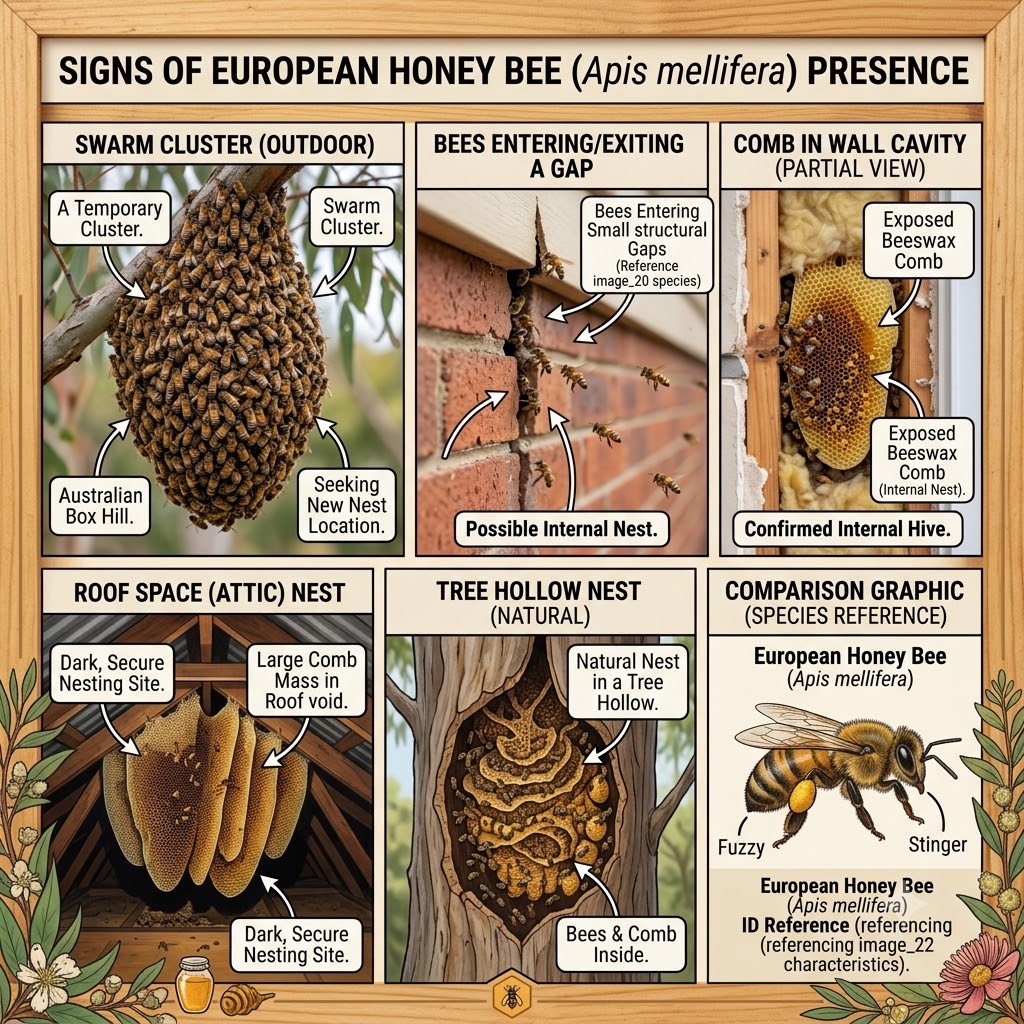
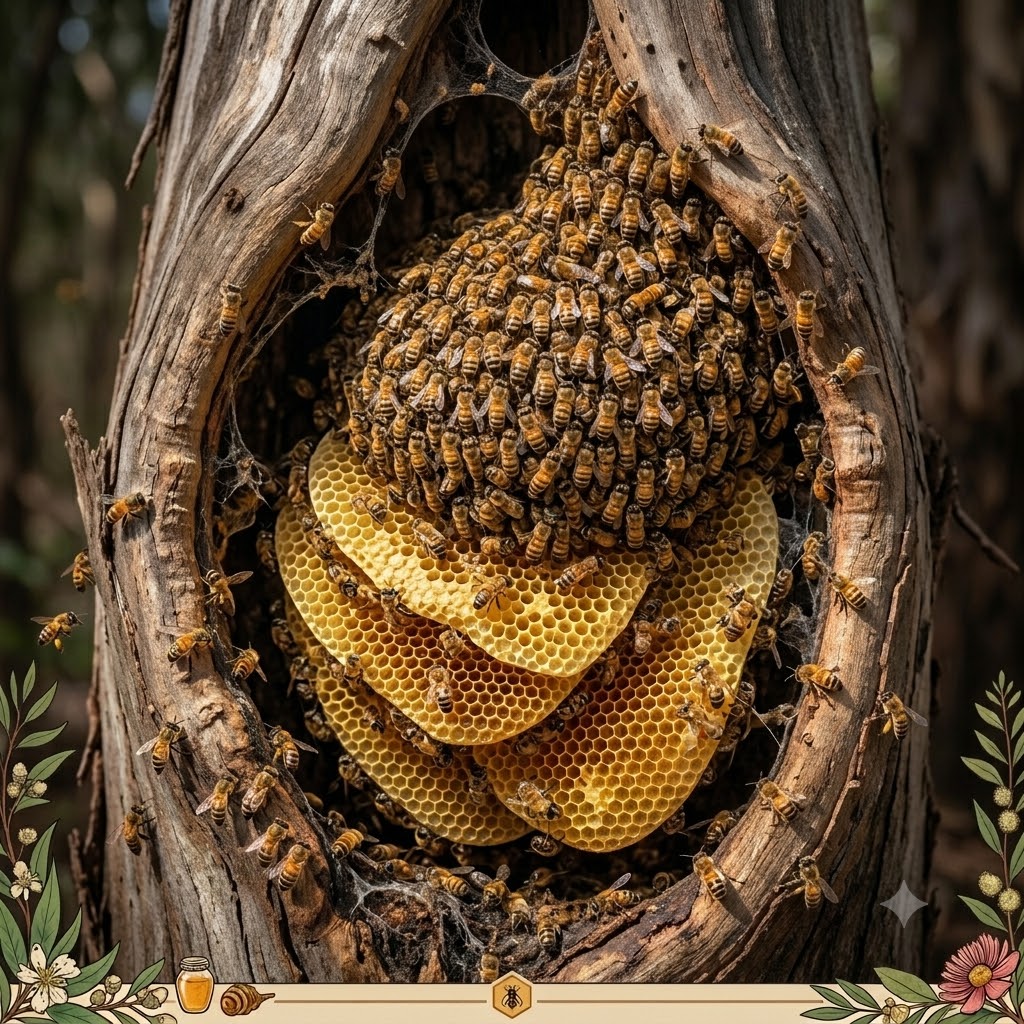
A travelling swarm often appears as a large, temporary cluster of bees hanging from a tree branch or fence while scout bees search for a permanent home, and this cluster will usually move on within a day or two if left undisturbed. A more established problem is signalled by bees consistently entering and exiting a small gap in the eaves, brickwork or roofline, or by visible wax comb inside a wall cavity, roof void or tree hollow.
If you notice a steady stream of bees using the same entry point over several days, it’s likely an active hive has formed inside the structure rather than a temporary swarm passing through.
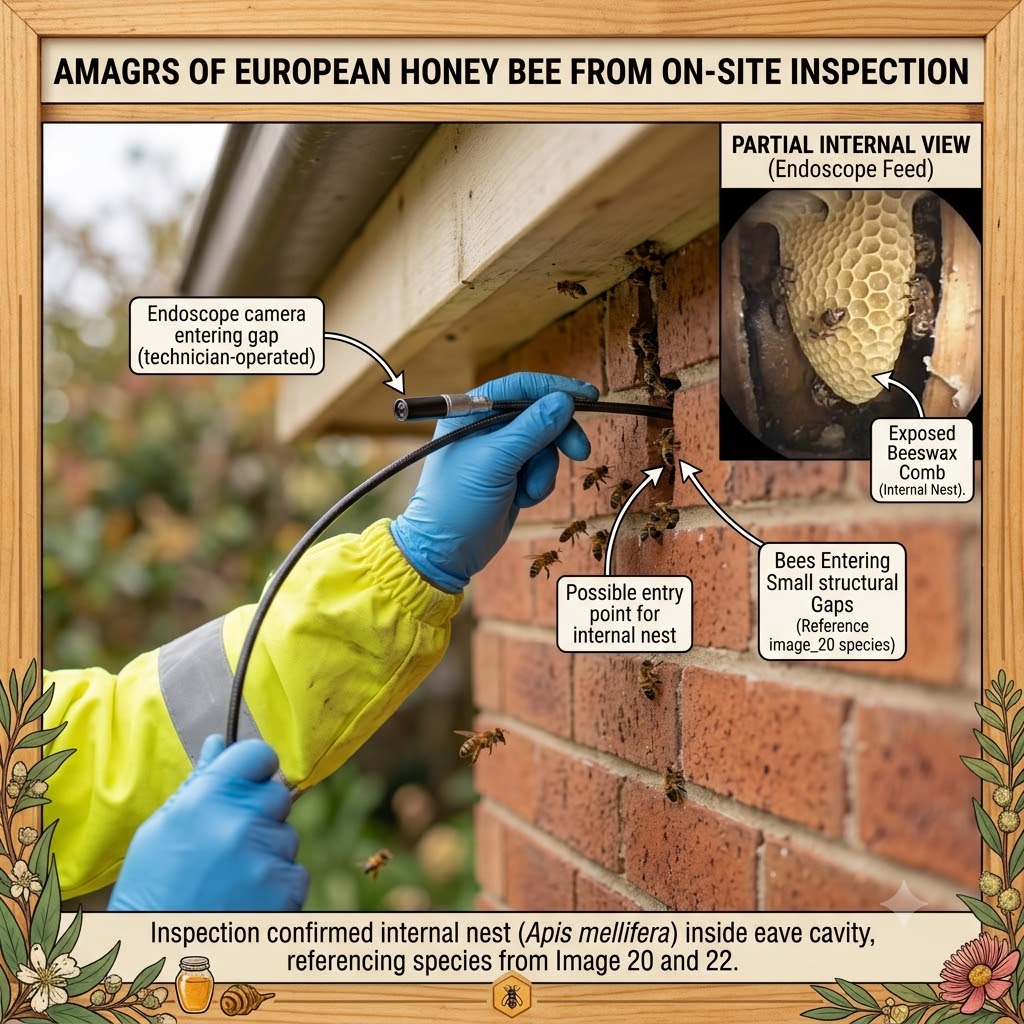
Every bee removal job starts with a careful inspection to confirm the species, locate the hive or swarm, and assess how established the colony is. Where a hive is inside a wall cavity or roof void, we often use an endoscope camera to confirm the exact position and size of the comb without needing to open up the structure unnecessarily.
Because European honey bees are a regulated species under the NSW Apiaries Act, and beekeeping in NSW requires registration with the NSW Department of Primary Industries, our default approach is to arrange live relocation of an accessible colony by a registered beekeeper rather than exterminating it. We only recommend chemical treatment in situations where safe live removal genuinely isn’t possible.
Wherever a hive or swarm is accessible, our preferred outcome is relocation: the colony and comb are carefully collected and handed over to a registered beekeeper, who rehouses the bees in a managed hive. This approach keeps the colony alive, supports local pollination, and avoids unnecessary chemical use around your home.
Chemical treatment is reserved for cases where a colony is built deep inside an inaccessible cavity, where structural damage would be required to reach it safely, or where the colony poses an immediate risk that can’t wait for a beekeeper to attend. We’ll always explain which approach applies to your situation and why before any work begins.
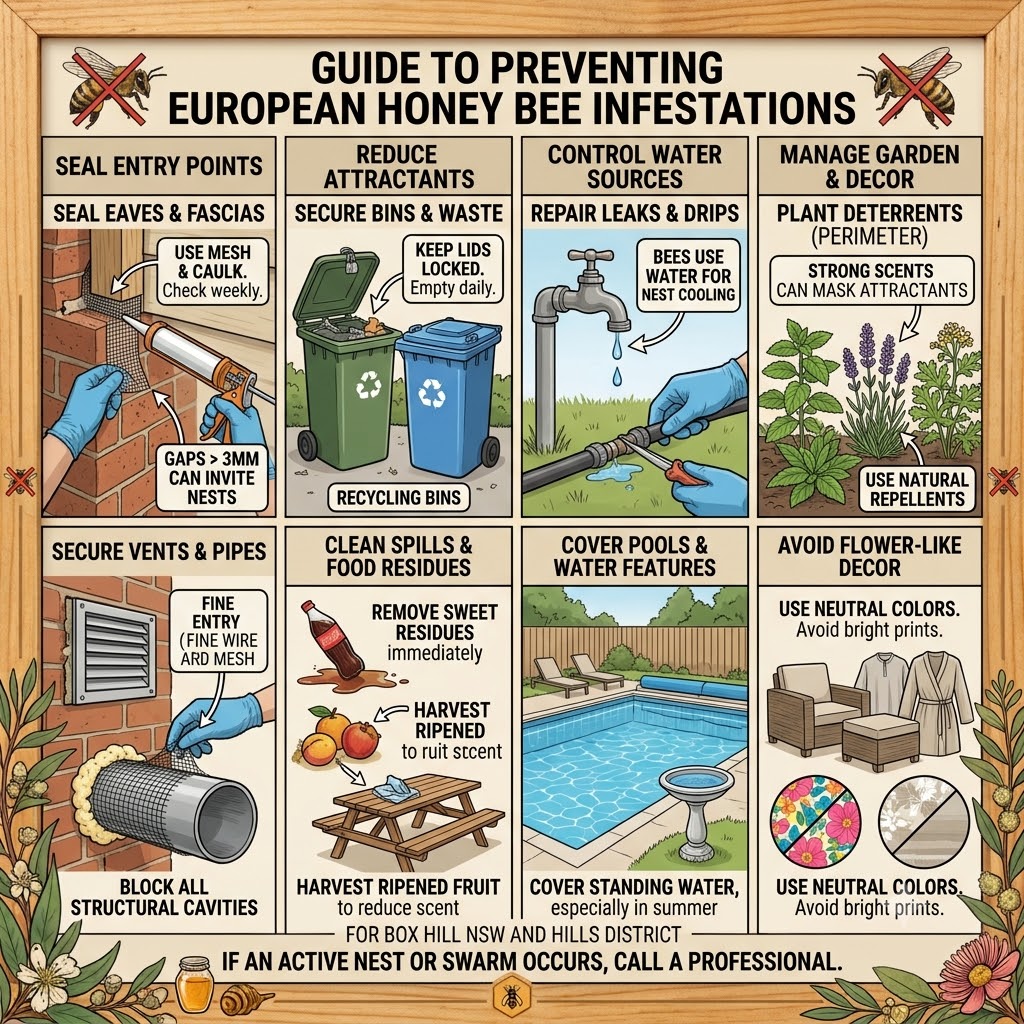
Reducing potential nesting sites is the best way to avoid bees establishing a hive on your property. Seal gaps around eaves, fascias, vents and weatherboards, fix dripping taps and irrigation leaks that provide a water source, and keep garden beds tidy so cavities in old furniture, sheds or retaining walls aren’t left exposed.
Regularly checking eaves, roof voids and garden trees during spring and summer swarming season allows a new swarm to be identified and, ideally, relocated before it settles in and grows into an established hive.
Is it illegal to kill honey bees in NSW?
There’s no blanket law against it, but honey bees are a protected, highly valuable pollinator species regulated under the NSW Apiaries Act, and beekeeping requires registration with the NSW DPI. Because of this, industry best practice is to relocate an accessible colony via a registered beekeeper rather than default to chemical treatment.
Will you relocate the bees instead of killing them?
Wherever it’s safe and practical, yes. We assess each hive or swarm individually and arrange relocation by a registered beekeeper when the colony is accessible. Chemical treatment is only used when live removal genuinely isn’t possible.
How do I know if it’s a swarm or an established hive?
A swarm is a temporary cluster, often hanging from a branch or fence, that will usually move on within a day or two. An established hive is signalled by bees repeatedly using the same entry point into a roof, wall or tree over several days, along with visible wax comb.
Can I remove a hive myself?
We don’t recommend it. Disturbing a hive can trigger defensive stinging, and hives hidden inside wall cavities or roof voids often require specialised equipment and beekeeping knowledge to remove safely and legally.

When relocation is not possible and safety is at risk, we use controlled and approved extermination methods. Our treatments remove the immediate threat while addressing nesting areas and entry points to prevent reinfestation. We focus on long-term protection and peace of mind.

Real feedback from customers who trust our pest control services, sharing their experiences, satisfaction, and the peace of mind they gained after choosing us.
Posted on GoogleTrustindex verifies that the original source of the review is Google. Patrick from Stark Pest Solutions was fantastic! He was prompt, professional, and incredibly thorough in identifying and treating the issues at my property. He took the time to explain everything clearly and made sure I understood the steps he was taking. The service was efficient, friendly, and genuinely reassuring. I’m extremely happy with the results and highly recommend Patrick and the Stark Pest Solutions team to anyone looking for reliable pest control.Posted on GoogleTrustindex verifies that the original source of the review is Google. Pat went above and beyond with his work. We had two pest control technicians come out, and they could not figure out how to get rid of the German cockroaches. Pat came and dealt with it quickly and efficiently. He also conducts our termite inspections for our properties and for all our family’s properties—the best one-stop shop to go to. I can’t talk highly enough about him.Posted on GoogleTrustindex verifies that the original source of the review is Google. Absolutely outstanding service! Patrick was friendly and knowledgeable, providing advice and answering all our questions. Great result after the treatment - highly recommend Patrick and Stark Pet Solutions to anyone needing reliable pest controlPosted on GoogleTrustindex verifies that the original source of the review is Google. Patrick is an absolute Legend - He is very reliable and full of great advices to keep pest away from home. Super thorough in the process, friendly, and fairly priced ! His Yearly spray has been keeping our Home inside and out completely pest free. He is a life saver ! Thank you for your help Patrick ! Don’t think twice ! HIGHLY RECOMMEND !Posted on GoogleTrustindex verifies that the original source of the review is Google. Patrick did an amazing job! Very professional, reliable, and friendly. He explained everything clearly and made sure the job was done properly. Great service and results — highly recommend Patrick for anyone needing a trustworthy pest controller, and will definitely see you again!Posted on GoogleTrustindex verifies that the original source of the review is Google. Highly recommend Stark Services Pest Control! Patrick was so polite, professional, and really knew his stuff. You can tell he takes pride in his work and genuinely cares about helping his customers. Great service, great communication, and very reliable. Would definitely use Stark Pest Control again!Posted on GoogleTrustindex verifies that the original source of the review is Google. Thank goodness I found Patrick through my local Drummoyne/Five Dock pages. Respectful, quick communication via text, very well priced, on time - not creepy. Unlike my previous pest controller who doesn’t show up, Patrick made contact with me the same day, and completed the job promptly within 48 hours. He even emptied my planter pots that were full of water from the heavy rain attracting mosquitoes, and he sprayed 3 wasp nests from my neighbours windows which share a boundary with our property. He also inspected my roof cavity for possum activity and found an old birds nest which he cleared. Have already recommended to two of my friends. See you again in the new year. Shiraz Papas DrummoynePosted on GoogleTrustindex verifies that the original source of the review is Google. Patrick from Stark Services has really showcased what going above and beyond looks like! He was super patient with helping us deal with our possum situation but also liaising with strata to get further roof repairs done. We are so thankful and would highly recommend his services!Posted on GoogleTrustindex verifies that the original source of the review is Google. Pat & the team have been incredible. Their service has been fantastic. They work in with my schedule, and spray with products pet friendly which I really appreciate. Pat was great in explaining what he had done, and what suggestions he had based on the area and property factors. He went above & beyond my expectations, and is so reasonably priced. I had a general Pest Spray & bird proofing for my Chimney. Highly recommend the Stark Services team - they are fantastic!